
You've increased your advertising budget on Amazon. Yet your margins continue to shrink. This isn't a coincidence; it's the direct result of Amazon's increasingly aggressive pricing strategy, the mechanisms of which remain largely unknown to the brands that sell there.
Today, Amazon's pricing strategy has a structural impact on margins: through AI-powered algorithms, a price control policy extended to all channels, and increased transparency for buyers. Understanding these mechanisms is now essential to managing your profitability on the platform.
In this article, we will decipher what has changed, explain why the pressure has accelerated, and give you concrete levers to regain control.
- Amazon has always controlled prices, but the framework has evolved.
- What really changed in 2025-2026
- Amazon Fair Pricing Policy: the concrete impacts on your product listings
- Sellers 3P vs Vendors 1P: two mechanisms, the same result on margins
- Why increasing your ads budget can worsen the situation
- Four concrete levers to protect your Amazon pricing strategy
- What WILIFT observes during audits and how we support brands
- Conclusion
Amazon has always controlled prices, but the framework has evolved.
Before analyzing recent developments, a basic observation must be made: Amazon has never allowed prices to form freely on its platform. From its inception, the marketplace has developed powerful mechanisms to maintain its price competitiveness. However, what has changed is the intensity and sophistication of these mechanisms.
Dynamic pricing: a structural pillar of the Amazon model
Amazon adjusts its prices continuously—sometimes several times an hour—based on demand, stock levels, and competitor pricing. This dynamic pricing is not an anomaly. It's a deliberate strategic choice made over 15 years ago, allowing Amazon to consistently remain competitive across the entire market.
For third-party sellers, this reality has long translated into a permanent race to align prices: follow or lose visibility.
From price parity to the Fair Pricing Policy
Amazon used to impose a strict price parity clause on 3P sellers, the S-4 clause, which required them to display a price on Amazon that was at least as competitive as elsewhere. This clause has since been formally abandoned. Learn more about the end of Amazon price parity
However, it was replaced by the Fair Pricing Policy, which is more subtle but just as restrictive. This change in framework has not eased the pressure on brands. On the contrary, it has made it more difficult to anticipate, because the rules are now applied by an algorithm, not by a clear contractual clause.
What really changed in 2025-2026
In recent years, two major developments have considerably amplified the pressure on brands: pricing algorithms made more powerful by artificial intelligence, and the arrival of Rufus which makes price history visible directly in the shopping experience.
AI-powered pricing algorithms: the Project Nessie case
Antitrust investigations, including the complaint filed by the US Federal Trade Commission (FTC), have brought to light the existence of Project Nessie, an Amazon algorithm capable of influencing prices across the entire market, far beyond simply reacting to competitors. According to these investigations, this mechanism generated over a billion dollars in additional profits between 2016 and 2018. Read the full analysis — Washington Monthly
As a result, Amazon is no longer simply following the market. In some categories, it is the one dictating it.
Rufus and price history: transparency that changes everything
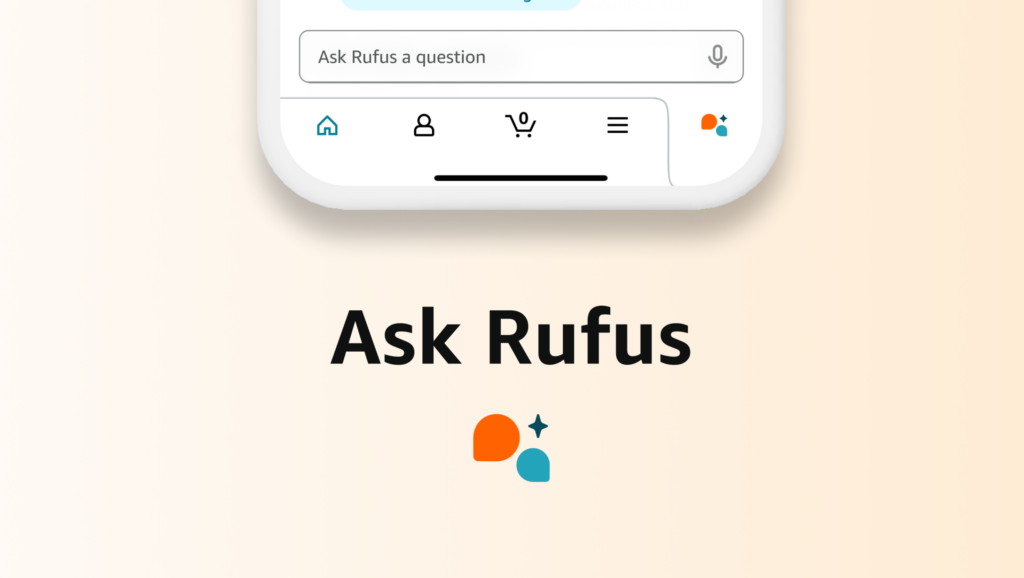
Since the beginning of 2026, Rufus – Amazon's AI shopping assistant, integrated with Alexa for Shopping, displays price history for 30, 90, and 365 days directly within the shopping interface. A shopper can now request: "Is this the best price recently?" and obtain an immediate visual response. Official Amazon source
For brands, the consequence is immediate: every promotion launched becomes a permanently visible reference price. Thus, your "normal" price can appear inflated to your customers the day after a promotional campaign.
Amazon's pricing strategy now dictates the market
Combined, these two mechanisms have shifted the balance of power. Amazon no longer adapts to the market; the market adapts to Amazon. And in this rebalancing, it is the brands' profit margins that absorb the brunt of the pressure.
Amazon Fair Pricing Policy: the concrete impacts on your product listings
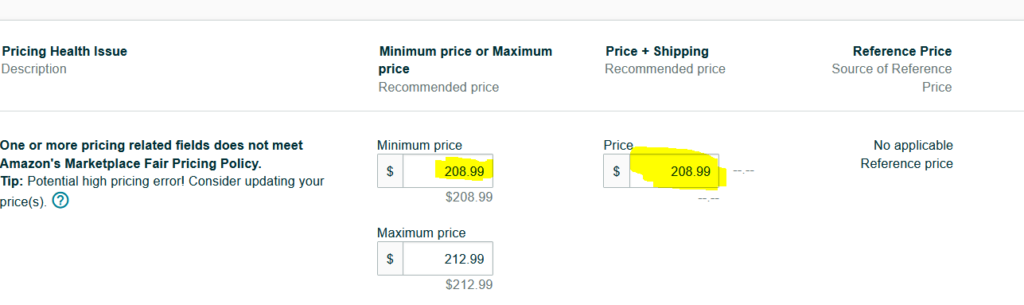
The Fair Pricing Policy is the main lever by which Amazon currently controls the prices of third-party sellers. It is often discovered too late, when the BuyBox has already disappeared.
What Amazon is really monitoring
Contrary to popular belief, the policy isn't limited to the Amazon platform. It compares your price to a very broad range of factors:
- Your prices on other e-commerce sites and competing marketplaces
- Your prices in physical stores
- Your prices on your own DTC website
- Past promotions still indexed on the web
- Multi-packs or bundles whose unit price is considered excessive compared to the product sold alone
The sanctions: Buy Box, delisting, suspension
The gradation of sanctions is clear, and it can be applied without explicit warning:
- Removal of the Buy Box on the product in question
- Product listing removed from the platform
- Seller account suspension in case of repeat offense
These penalties are particularly difficult to anticipate if you don't continuously monitor your prices across all your channels. However, this is rarely the case for e-commerce teams that manage Amazon in silos. Understanding the Fair Pricing Policy in detail
The real constraint on your RRP
The price parity clause has formally disappeared, but the constraint remains. If your Amazon price is perceived as uncompetitive compared to what you charge elsewhere, you are at risk. It's no longer a written contractual rule; it's an algorithm that decides.
Sellers 3P vs Vendors 1P: two mechanisms, the same result on margins
Amazon's pricing strategy impacts margins differently depending on your sales model. However, in both cases, the conclusion is the same: your profitability suffers.
On the 3P side: very regulated pricing freedom
Between the Fair Pricing Policy, reliance on the Buy Box, and competitive pressure from other sellers, 3P sellers have very little room for pricing flexibility. Amazon's algorithm systematically favors the lowest-priced offer of equivalent quality. Matching prices is often the only way to maintain visibility, but at what cost to profit margins?
On the 1P side: Net PPM and increasing pressure in negotiations
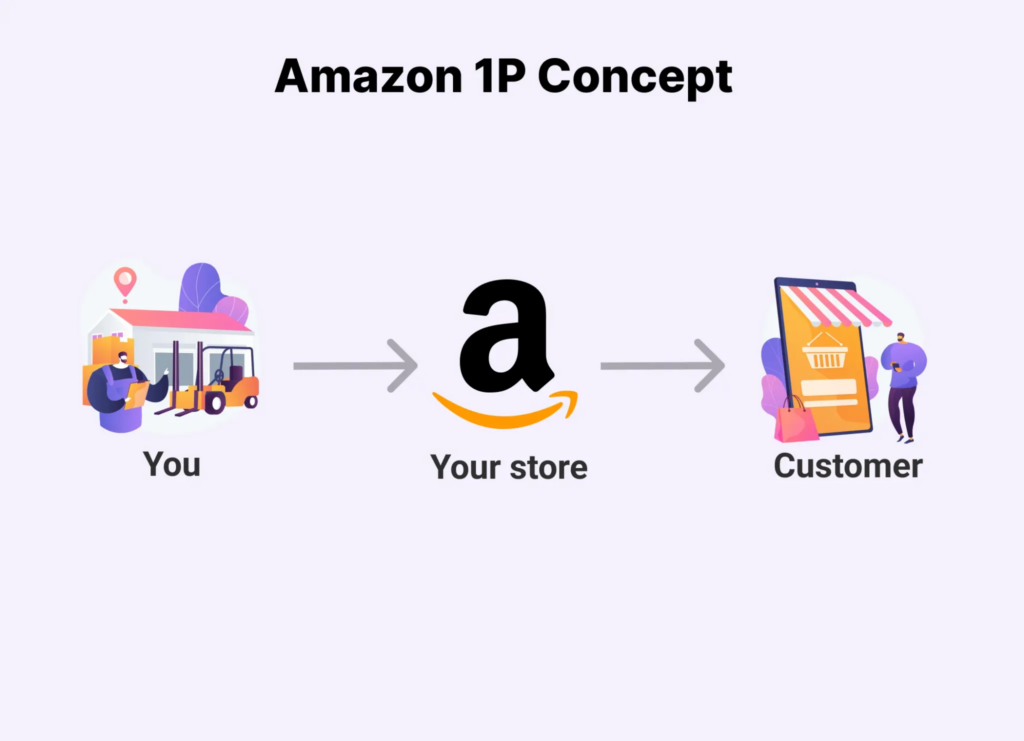
On the Vendor side, the most intense pressure comes during the annual negotiations (AVN/JBP). Amazon regularly pushes for an increase in Net PPM, the net profit per unit captured by Amazon, and for larger trade and AON budgets. This observation is shared by many teams managing Vendor accounts: with each negotiation cycle, the share of value captured by Amazon increases.
The same underlying mechanism
Whether you're a Seller or a Vendor, the principle is the same: Amazon optimizes its price competitiveness by transferring the pressure to its partners. Your discounts, your trade budgets, your pricing adjustments—all of this ultimately finances the "best price" promise displayed to the customer.
Why increasing your ads budget can worsen the situation
Faced with shrinking profit margins, many brands are reacting by increasing their advertising budgets. However, this is often the worst decision to make if pricing strategy hasn't been addressed beforehand.
The vicious cycle to identify quickly
The causal chain is simple, but rarely identified in time:
Price constraint → low CVR → Amazon algorithm degrades organic ranking → compensation by advertising budget → rising acquisition cost → net margin collapses further.
Analysis of Amazon accounts shows that 28 to 40% of the monthly advertising budget is spent on clicks that never result in a sale. On a budget of €5,000/month, this represents between €1,400 and €2,000 invested as a complete waste each month.
The Rufus effect on purchasing behavior
Thanks to the price history now visible for up to a year, shoppers wait for promotions, compare prices more actively, and postpone purchases if the current price is higher than the most recent low. As a result, each promotion becomes a perceived floor price. Your "normal" price is structurally weakened as soon as you launch regular discount campaigns.
Cross-channel consistency: an often overlooked imperative
If your DTC price is consistently lower than your Amazon price, you are potentially subject to the Fair Pricing Policy and create a negative perception among your customers on the platform. Therefore, Amazon pricing management can no longer be handled in isolation. It impacts your entire distribution network and vice versa.
Four concrete levers to protect your Amazon pricing strategy
Faced with these constraints, resignation is not the right response. Here are four strategic decisions you can make right now.
1. Review your assortment strategy on Amazon
Not all products have the same price elasticity or the same role in your product range. Therefore, it's often more profitable to focus your Amazon efforts on high-margin, high-turnover items, rather than defending an entire catalog under constant pressure. Prioritizing is a strategic decision, not an admission of weakness.
2. Diversify your channels without triggering the Fair Pricing Policy
Being present on other retailers such as Walmart, Fnac, Cdiscount or develop the DTC This is a relevant resilience strategy. However, to avoid triggering the Fair Pricing Policy, differentiate your offers: exclusive bundles, specific formats, channel kits. The goal is to make direct price comparisons structurally impossible.
3. Structure a MAP policy and control your distribution
Uncontrolled resellers who undercut prices are often the primary reason for triggering the Fair Pricing Policy. A clearly defined Minimum Advertised Price (MAP) policy, communicated and enforced across all your business partners, is a non-negotiable prerequisite for protecting your prices on Amazon.
4. Align your teams around the topic of pricing
As long as e-commerce, trade marketing, finance, and sales operate in silos, Amazon will continue to exploit your pricing blind spots. Managing Amazon's pricing strategy is a cross-functional business decision, not a technical issue reserved for the e-commerce team.
What WILIFT observes during audits and how we support brands
These issues appear in almost all the accounts we audit at WILIFT. The most frequent warning signs are as follows:
- An advertising budget that is constantly increasing, while CVR and net margin are stagnating or declining
- A Buy Box that was lost despite being well-optimized and highly rated.
- DTC or reseller promotions triggering Fair Pricing alerts without the internal team realizing it
- A lack of visibility on the actual net profit margin, once Amazon fees, advertising, and discounts are deducted.
Our approach: catalog and pricing before campaigns
Before making any changes to advertising campaigns, we always begin by analyzing the pricing structure, distribution constraints, and consistency across channels. This is the only way to ensure your advertising budget is operating on a sound basis and not simply compensating for an unresolved underlying problem.
Conclusion
The decline in margins on Amazon is not inevitable. In the vast majority of cases, it's the result of a pricing strategy developed in another era, now confronted by fundamentally different mechanisms. AI algorithms, Rufus, Fair Pricing Policy: these developments are not insignificant. They are redefining the rules of the game for all brands on the platform.
Understanding these mechanisms is a first step. Adapting your strategy accordingly is what makes the difference between a profitable long-term Amazon presence and a constant race to spend money to maintain visibility.
Are your margins eroding on Amazon and you don't know exactly where to focus your efforts first?
At WILIFT, we conduct pricing and catalogue audits to precisely identify your vulnerabilities and provide you with a concrete action plan tailored to your structure.
Contact us for an initial, no-obligation discussion.
Recent Comments